Proof of Build

§1 The business card

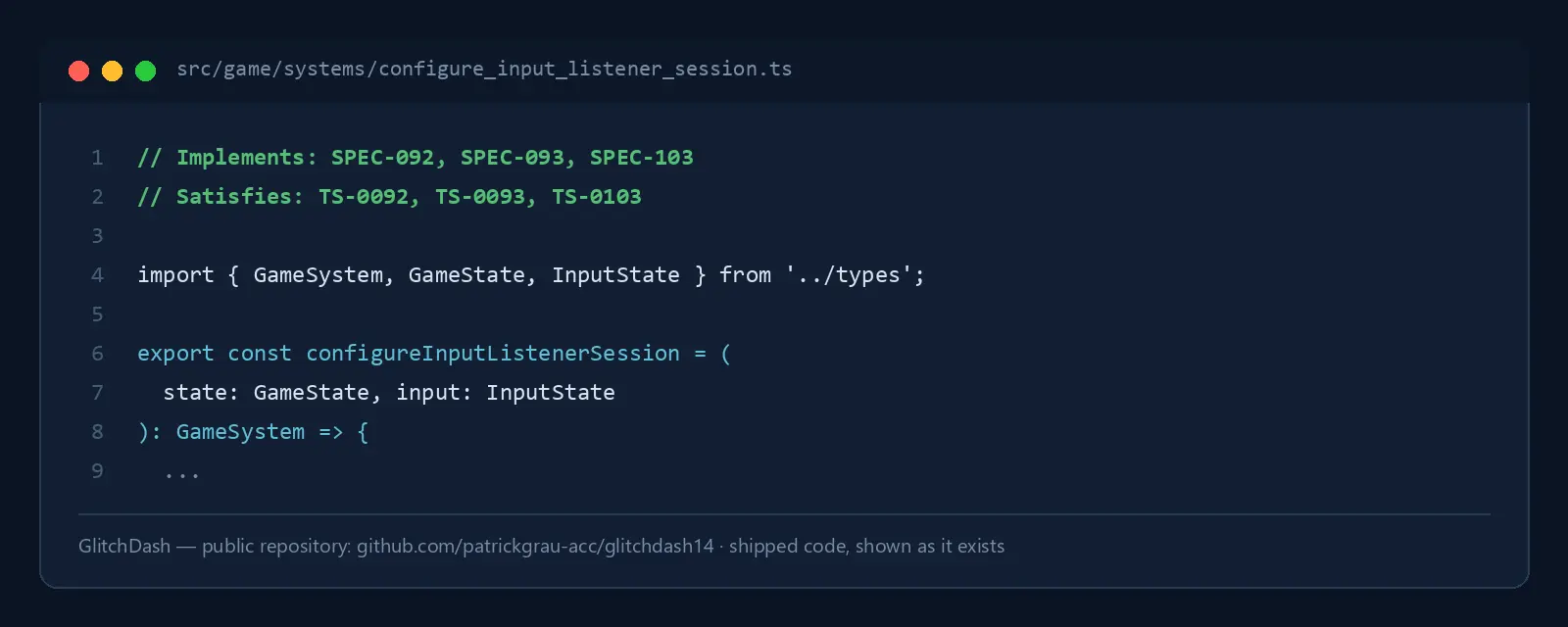
A shipped source file whose first two comment lines cite the specification it implements and the test that covers it.
Every shipped file opens by citing the specifications it implements and the tests it satisfies. Point at any button in the running app and ask “why do you exist?” — the file answers.

§2 The rule against optimism

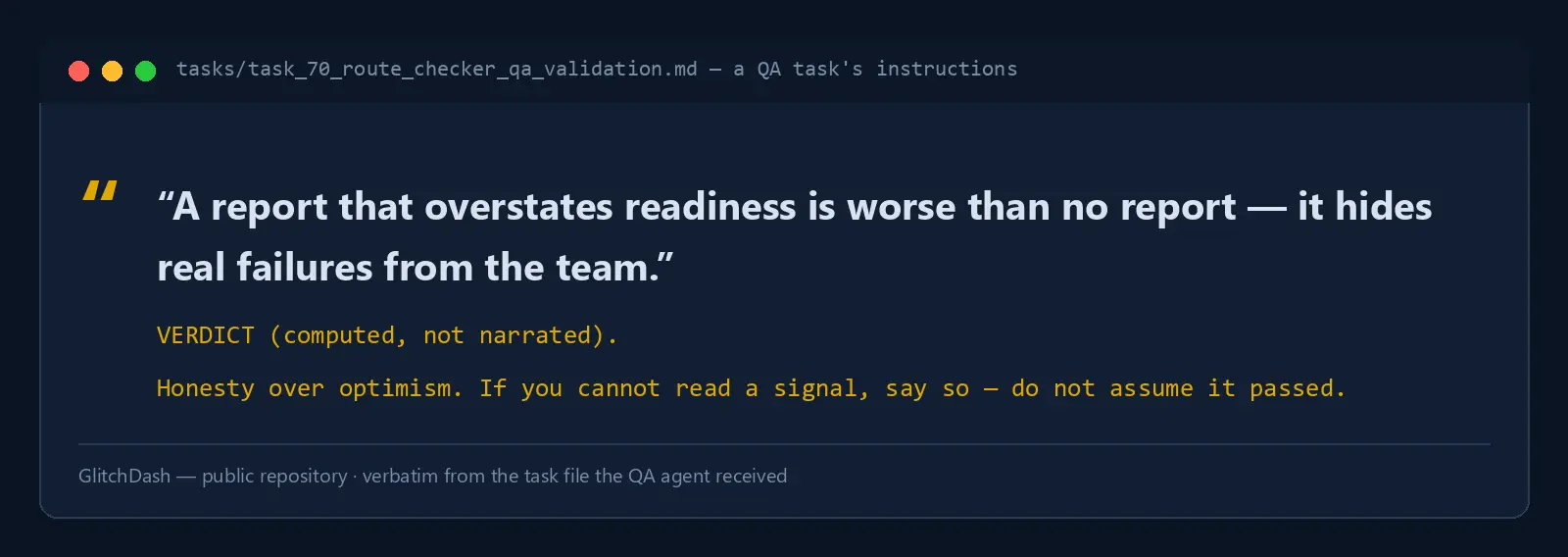
A QA task’s written instructions from a production build, forbidding the agent from reporting tests it did not run.
From a QA task’s instructions in a production build. Agents are forbidden to claim they tested what they didn’t run.

A report that overstates readiness is worse than no report.

§3 Nothing verifies its own work

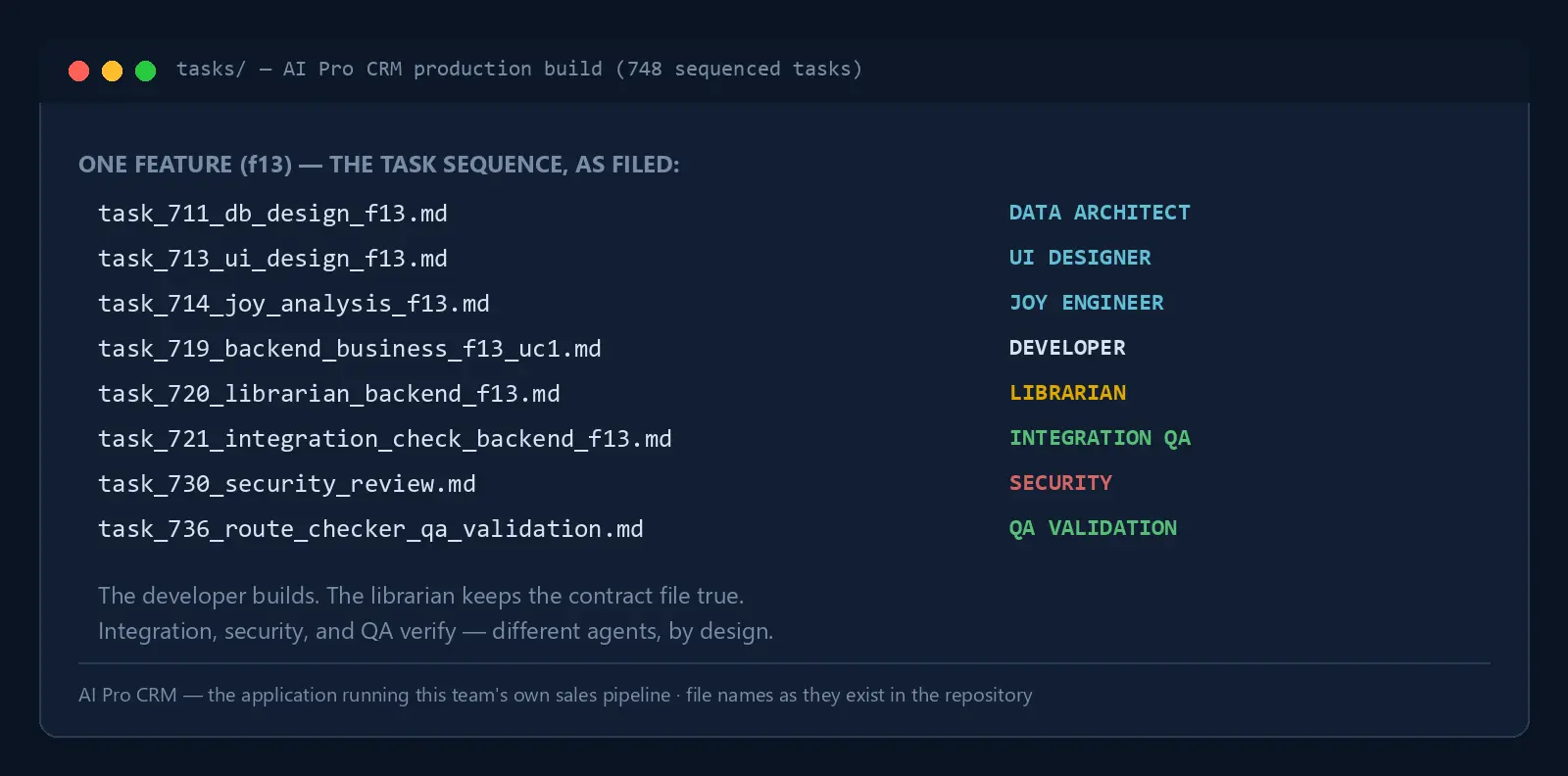
A real task sequence showing the developer, QA and security roles assigned to three separate agents.
The developer analyzes, QA validates, security reviews — three roles, three agents, by design.

§4 The second opinion is a different vendor
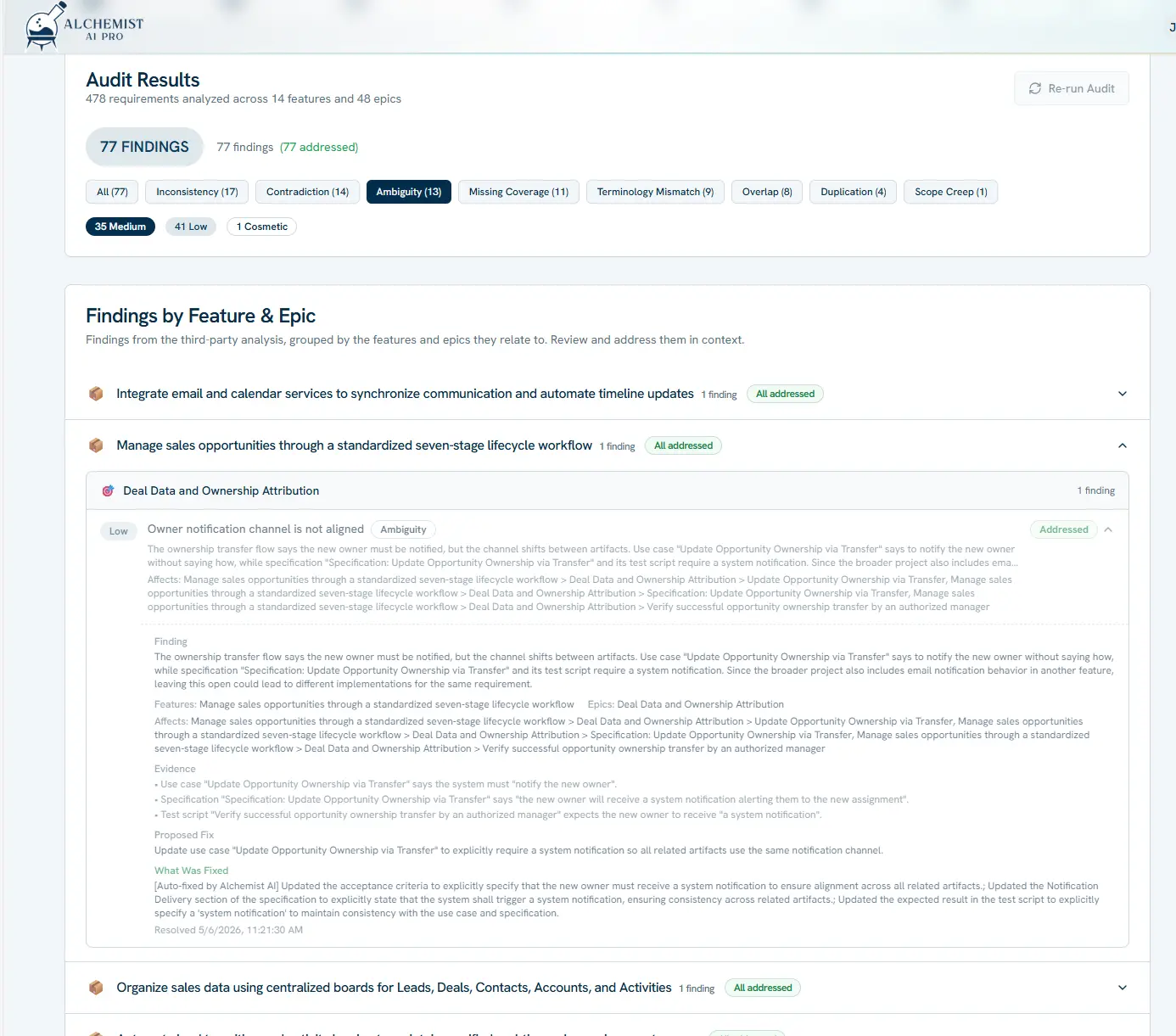
The Audit stage results: 478 requirements analyzed, 77 findings raised, 77 findings addressed.
The Audit stage is a separate AI from a separate company reviewing all requirements for conflicts, gaps, and ambiguity. Run against our own internal build, it returned 478 requirements analyzed · 77 findings · 77 addressed. It works for you, not for us.

§5 Advocates for absent humans

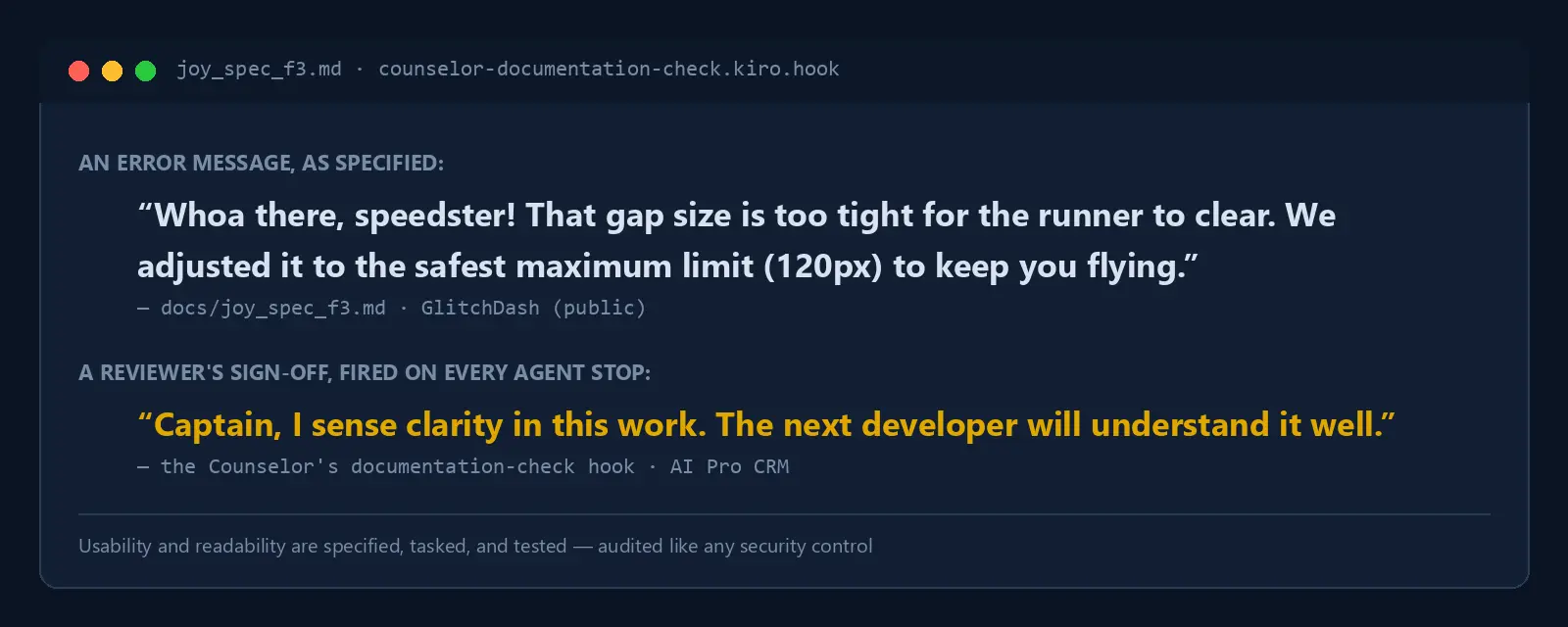
Two agent findings raised on behalf of users who were not in the room — one on playability, one on readability.
Usability and readability are specified, tasked, and tested — audited like any security control.
Whoa there, speedster! That gap size is too tight for the runner to clear.
The next developer will understand it well.

§6 The human gate
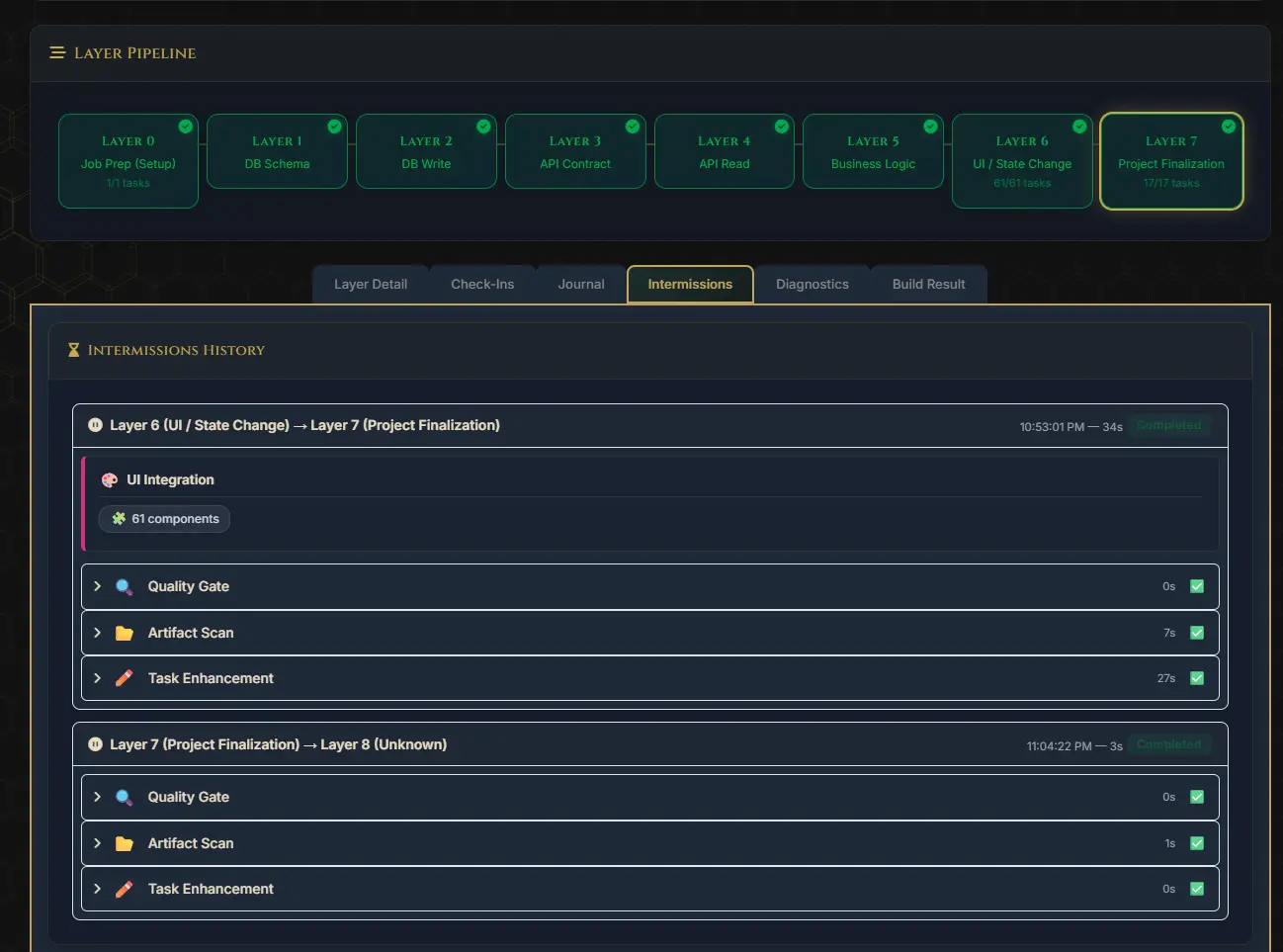
Layer-boundary intermission controls: Quality Gate, Artifact Scan and Task Enhancement, each able to pause the build for review.
Builds can pause at every layer boundary for human review. When someone asks “does a person actually check this?” — this is the switch.

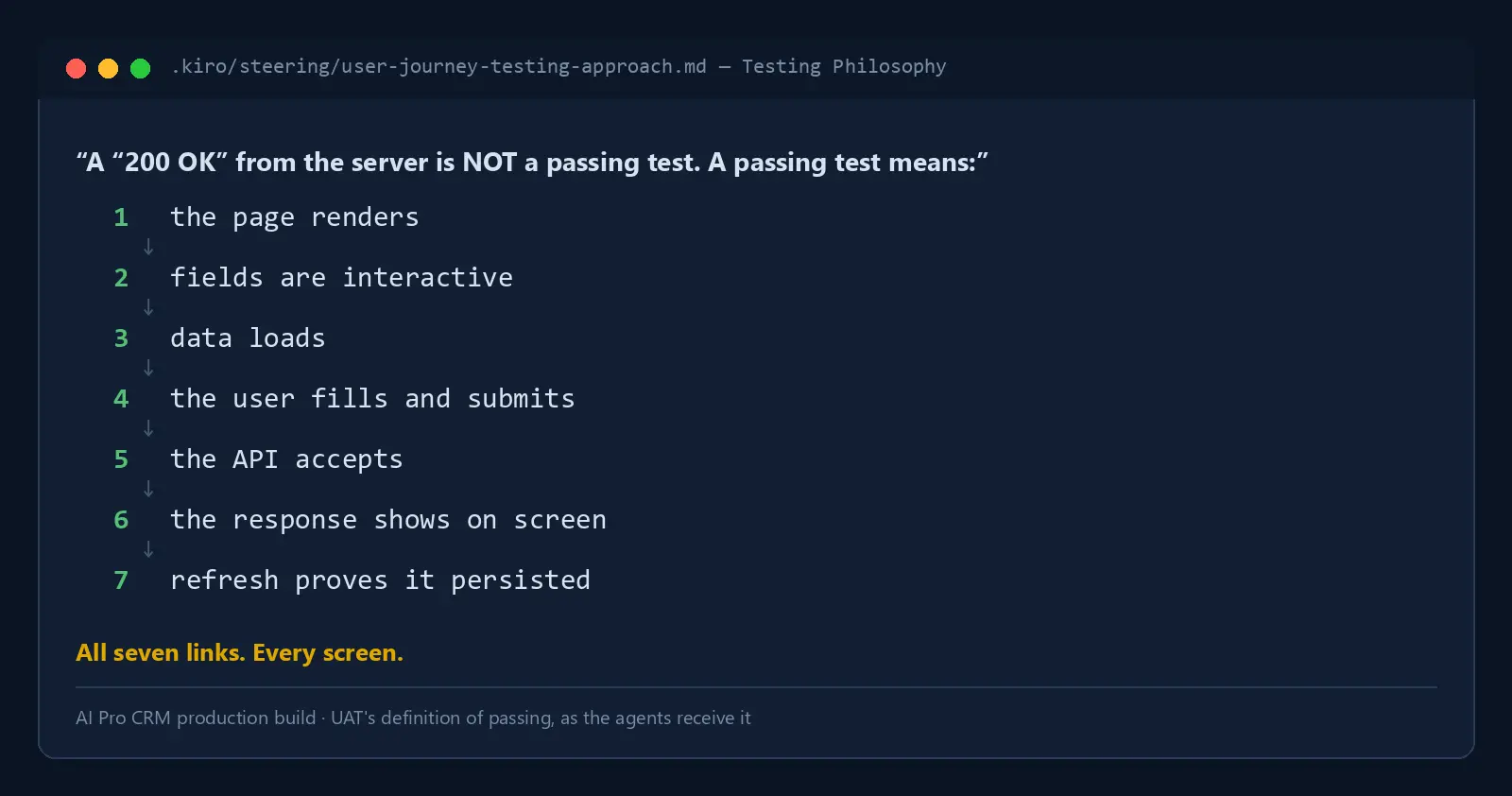
§7 A 200 OK is not a passing test

The UAT definition of a passing test — a seven-link chain that ends at proving the data persisted.
UAT’s definition of passing. All seven links, every screen.
page rendersfields interactivedata loadsuser fills and submitsAPI acceptsthe response shows on screenrefresh proves it persisted

§8 The build that learns
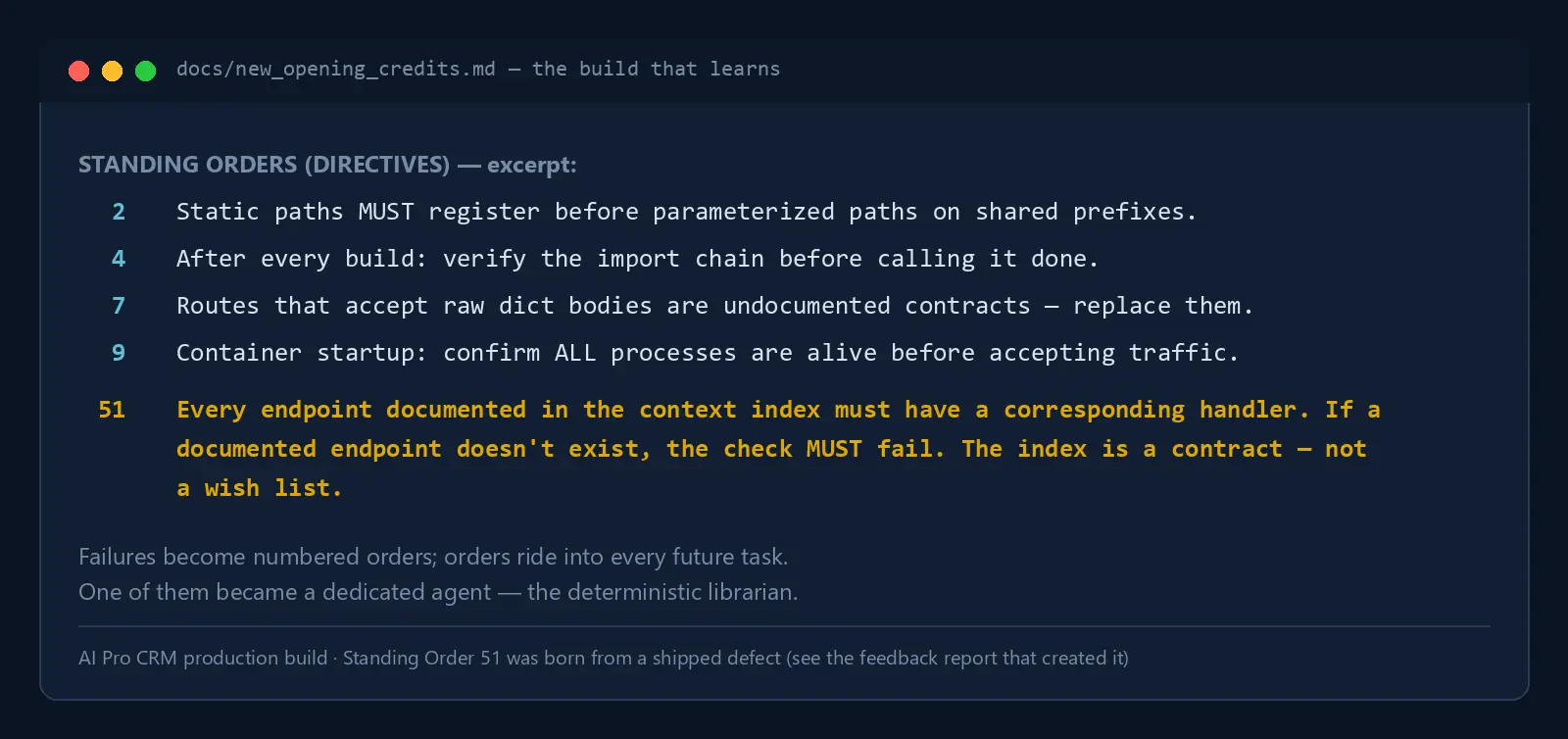
A numbered list of standing orders carried into future tasks, with SO-51 highlighted.
Failures become numbered standing orders; standing orders ride into every future task. One of them became a dedicated agent whose only job is keeping the build’s contract file true. Every AI tool starts from zero. This one compounds.

Questions, or a build of your own to price: jamie@acc3int.com

Every image on this page is a screen from a production build — the GlitchDash public repository, the Alchemy Pro CRM session, and the AlchemyCrew workflow that built GlitchDash. Sensitive regions (email addresses, billing account, project IDs) are blurred; nothing else is edited. The audit figures in §4 are from the CRM’s own audit run.

Ready to see your own receipt?

We budget two hours of human time per use case. Bring us a real project and test the discipline.

Bring us a real project →

© 2026 AI Pro Holdings, Inc. All builds verified. All receipts public.